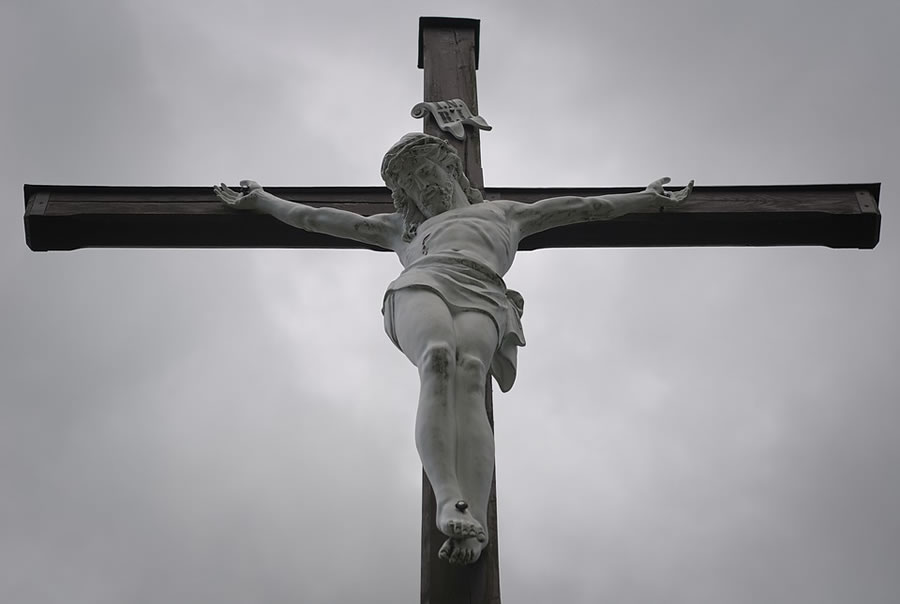
A Hero Churchman and Martyr
10-11-2026Weekly ReflectionFive decades after his death, the arrest of the Bishop of Leitmeritz by the Communist regime in the 1950s has now also been legally erased - Prague Archbishop Pribyl: Five decades after his death, Cardinal Stepan Trochta (1905-1974), persecuted by the communist regime in Czechoslovakia, has been fully rehabilitated by the courts.
The district court in Litomerice, where he served as diocesan bishop from 1947 to 1974, ruled on Thursday that Trochta had been unlawfully deprived of his liberty from July 19, 1950, to January 16, 1953. He was not allowed to leave his residence and was under constant surveillance. The verdict from the subsequent political show trial, which sentenced Trochta to seven years in prison, had already been overturned in1968.
Trochta, a member of the Salesian order, suffered severe persecution under the Nazi occupation. Because of his contacts with the Czech resistance, he was arrested by the Gestapo in 1942 and deported to the Theresienstadt, Mauthausen, and Dachau concentration camps. He barely survived his imprisonment, his health severely compromised. In 1947, Pope Pius XII appointed Trochta Bishop of Leitmeritz. After the Communist takeover in 1948, Trochta once again became a target of a totalitarian regime. Even after his release from prison in 1960 as part of an amnesty, Trochta was still not permitted to exercise his episcopal office and was forced to work as a manual laborer for a time.
However, this overturning had not extended to the two-and-a-half-year internment Trochta had previously endured. Archbishop Stanislav Pribyl of Prague and Administrator of the Diocese of Litoměřice declared he was pleased that the state judiciary had now also recognized the injustice after the verdict was announced. According to the church portal "Cirkev.cz," Pribyl stated that Trochta is already considered a martyr by the faithful and may even deserve to be canonized. Lubomir Müller, the lawyer appointed by the court to represent Trochta, described the decision as "moral satisfaction that will go down in the history of Czech justice." The proceedings were initiated by Jan Kratochvil, director of the Brno Museum of Czech, Slovak, and Ruthenian Exile. The documents reveal surveillance extending even to the bishop's bedroom: at times, a member of the State Security Service even slept there.
It was only the Prague Spring that brought Trochta back to his episcopal office. In 1968, the Supreme Court overturned the politically motivated verdict against him. The following year, Pope Paul VI (1963-1978) appointed Trochta a cardinal, initially in secret ("in pectore"). In 1973, the Pope made the Czech bishop's elevation to the College of Cardinals public. (NOTE: The Prague Spring was a period of political liberalization and reform in Czechoslovakia during the spring of 1968 that lasted for approximately four months. It represented an attempt to introduce democratic reforms and greater freedoms within the existing communist system, aiming for what was described as "socialism with a human face.")
Trochta remained under constant surveillance and harassment by the state security service until his death. He died on April 6, 1974, at the age of 69, shortly after an operation, from the effects of a stroke. According to various reports, he was interrogated for hours by an employee of the communist state church office the day before his death. None other than Archbishop Karol Wojtyla of Krakow – the future Pope John Paul II – paid his last respects to Trochta at his funeral, along with Cardinal Franz König (1905-2004), Archbishop of Vienna, Cardinal Alfred Bengsch (1921-1979), and several thousand other people. However, the cardinals were forbidden by the state from concelebrating the Resurrection Mass.
Source kath.net/news/91464
Padre Pio's "Visit" to Venerable Cardinal Mindszenty's Prison Cell
The figure of Saint Pio of Pietrelcina, the stigmata-bearing friar prayed to and venerated by millions, never ceases to amaze. A new piece has just been added to the collection of mysterious episodes that accompanied his life. It concerns a phenomenon of bilocation that supposedly led Padre Pio to a cell in Budapest, where Cardinal József Mindszenty, Primate of Hungary, was being held.
Cardinal Mindszenty was imprisoned in December 1948 by the Hungarian communist authorities and sentenced to life imprisonment the following year after a show trial accusing him of conspiracy against the government. He remained in prison and under house arrest for eight years, was released during the 1956 uprising, and then took refuge in the U.S. Embassy in Budapest, where he remained until 1973, when Paul VI relieved him of his leadership of the diocese.
It was during the most difficult years of his imprisonment that the episode of bilocation occurred, which would lead Padre Pio to bring comfort to the cardinal. Testifying to this before the judges of the friar's beatification process was one of the men closest to him, Angelo Battisti, administrator of the Casa Sollievo della Sofferenza and typist for the Vatican Secretariat of State.
This is how the scene of Padre Pio's visit to Mindszenty is described: "The stigmatized Capuchin, while in San Giovanni Rotondo, went to him to bring him the bread and wine, needed to become the Body and Blood of Christ, in this case, bilocation takes on an even greater significance as an anticipation of the eighth day, that is, of the resurrection, when the body is freed from the limitations of space and time; the serial number on the prisoner's pajamas is therefore symbolic, 1956, the year of the cardinal's release."
Cardinal Mindszenty was arrested and imprisoned and kept under constant surveillance. As time passed, the desire to celebrate Holy Mass grew stronger. One morning, Padre Pio appeared with all the necessary items. The cardinal celebrated his Holy Mass, and Padre Pio served at the Mass. Then they talked, and finally Padre Pio disappeared with what he had brought.
One evening in March 1965, Angelo Battisti, at the end of a conversation, asked the stigmatized friar: "Father, did Cardinal Mindszenty recognize you?" After an initial annoyed reaction, the saint from Gargano responded: "Of course, we met and talked, do you think he didn't recognize me?" Thus, confirming the bilocation in prison that had occurred years earlier. "Then," Battisti added, "he became sad and added: 'The devil is ugly, but they had made him uglier than the devil!'" This demonstrates that Padre Pio had helped him through prayer from the very beginning of his arrest, because it is humanly inconceivable how the cardinal could have withstood all the suffering he was subjected to, which he describes in his memoirs. Padre Pio concluded: "Remember to pray for this great confessor of the faith, who suffered so much for the Church."
(See Andrea Tornielli, Vatican Insider, July 2, 2014, and the book, Padre Pio by Stefano Campanella (Edizioni Padre Pio da Pietrelcina)
NOTE: Fr. Adolphe Tanquerey in his book on Spiritual and Mystical Theology indicated that bilocation is an extraordinary mystical phenomenon. Authentic divine bilocation is exceedingly rare and never given to feed curiosity. It is a freely given grace, a charism given for the benefit of others), uniquely granted by God to highly advanced souls to fulfill urgent pastoral needs, comfort the sick, or convert souls when physical travel is impossible. Caused by God Tanquerey explains that the mystic's actual physical body remains in one location. The appearance at the second location occurs through: Sensible Representation: God or His angels project a highly realistic corporeal, imaginative, or intellectual vision of the person to observers. Or through The Gift of Agility: Alternatively, the phenomenon can sometimes be reduced to rapid, instantaneous transport where the mystic is moved to the second location and returned so quickly that it creates the illusion of being in two places at once.
BACK TO LIST